Purchasing sim racing equipment through our links may generate a sales commission for Rig & Rail at no extra cost to you. How Rig & Rail earns affiliate commissions
A sim racing cockpit is the frame that locks your wheel, pedals, and seat in a fixed position. Aluminum profile construction is the standard choice because it resists the twisting forces that direct drive wheels generate—a wobbling frame makes lap times impossible to chase consistently.
The three rigs compared here span different budgets and assembly requirements. Each listing uses marketplace titles without full specification sheets, so you'll need to verify key details—frame dimensions, profile sizes, included components, and compatibility with your wheel base and pedals—before committing.
Why Frame Rigidity Matters
Aluminum profile frames with T-slot channels resist the force feedback vibrations that tube-steel flexes under, keeping your inputs consistent lap after lap. The three options here all claim aluminum construction, but the specific profile dimensions (8020, 4080, 4040, etc.) determine how much lateral deflection you'll feel under load.
Lower-cost adjustable frames often trade profile thickness for affordability. Custom-build and kit options let you choose or upgrade materials, but assembly time and sourcing individual fasteners add cost and complexity.
The Three Rigs Compared

Adjustable Cockpit Frame ($388)
This entry-level rig from Accent Lab Store is advertised as an "adjustable racing sim cockpit rig aluminum frame" for VR gaming. The listing claims aluminum construction and adjustability, but does not disclose:
- Profile dimensions or gauge (8020, 4040, custom extrusion)
- Exact included parts (seat rails, wheel mount plate, pedal tray, fasteners)
- Weight capacity or recommended direct drive wheel torque rating
- Dimensions of the assembled frame
- Mounting compatibility with standard 70mm and 50mm wheel bases
Verify before buying: Ask the seller for frame profile specifications, a parts list, and compatibility confirmation with your specific wheel base model and torque rating. Check whether the seat is included or sold separately.
At this price point, the frame likely uses thinner profiles than higher-cost options, which may allow noticeable flex under a direct drive motor rated above 8–10 Nm of torque. This rig suits entry-level setups with mid-range wheels or controller-based racing.
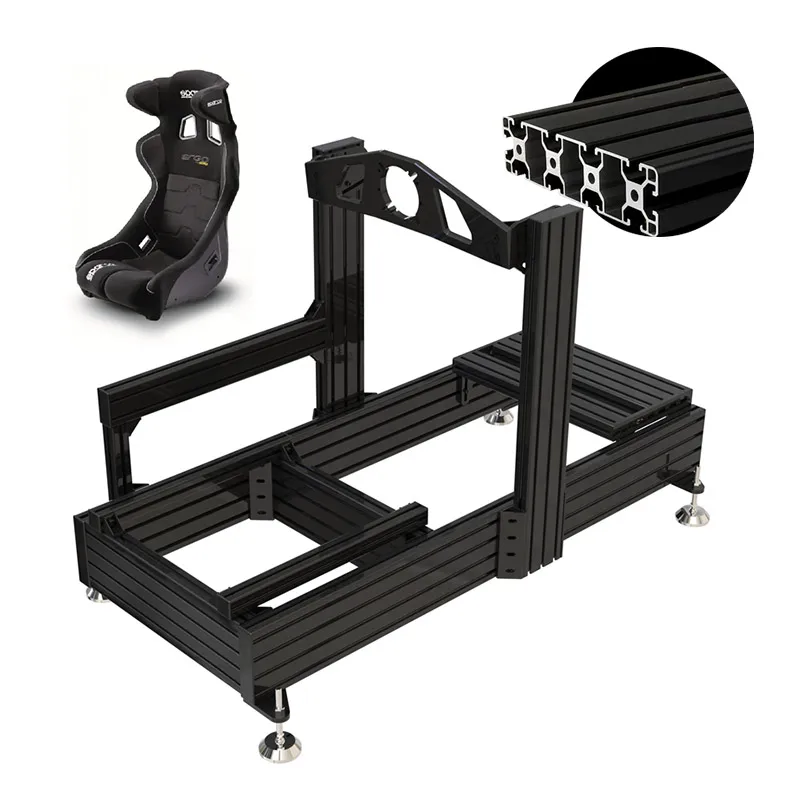
Complete Custom Build ($1,610)
LinkBuy's listing describes a "custom extruded aluminum frame complete sim racing driving emulator cockpit and complete accessories." The title suggests a full assembly ready to use, but provides no details on:
- Which aluminum profiles are used and their load-bearing specifications
- What "complete accessories" means (seat included? pedal tray? steering wheel mounting plate?)
- Whether it arrives pre-assembled or requires final bolting and calibration
- Cable management and cable path routing
- Compatibility with direct drive bases above 15 Nm
- Warranty or after-sale support for assembly issues
Verify before buying: Request a detailed parts inventory, assembly photos, and confirmation that the seat, pedal tray, and wheel mounting plate are included in the sale. Confirm whether steering wheel and pedals are separate purchases.
A custom build at this price often signals a fully furnished option that eliminates sourcing parts individually. If the frame uses robust 4080 profiles and includes seat brackets and a pedal platform, it suits builders wanting an integrated system without DIY fabrication. Shipping weight and dimensions will be significant; confirm delivery to your region.
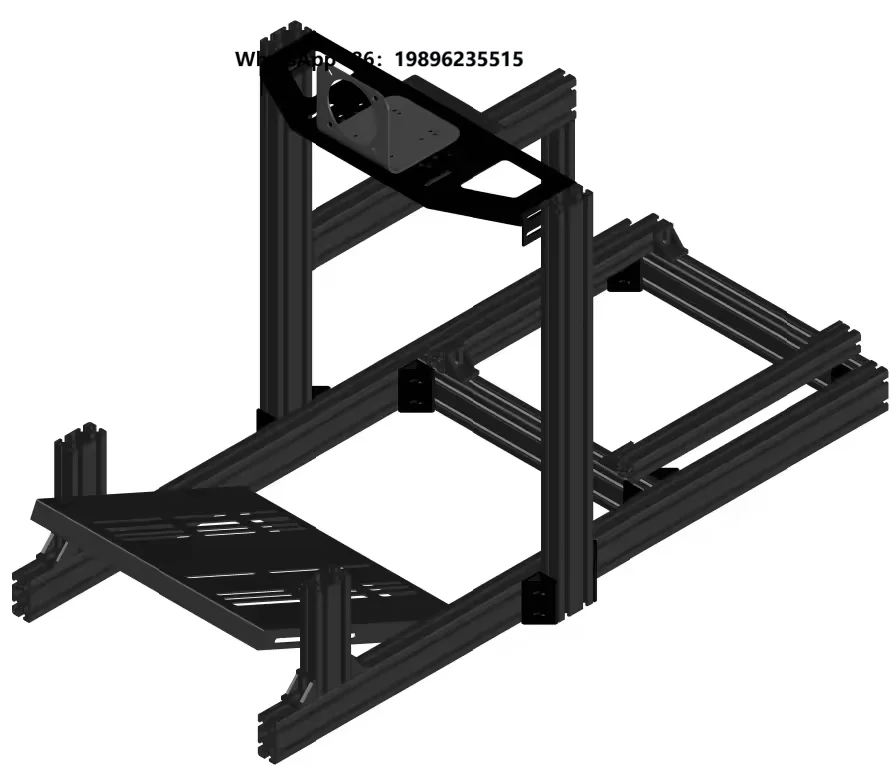
4080 Aluminum Profile Kit ($1,011)
Shop1105728142's "4080 aluminum profile frame kit" is positioned as a DIY chassis for motion simulation. The listing states "4080" profile size—a 40mm × 80mm extrusion—but omits:
- Total frame dimensions (height, width, depth) when assembled
- Quantity of profile pieces and fastener hardware included
- Whether the kit includes seat rails, wheel mount bracket, and pedal platform or only the frame skeleton
- Assembly instructions or CAD files
- Pre-drilled T-slot nut positions or guidance on where to place fasteners
- Paint or anodizing finish
Verify before buying: Ask for a component list, assembly photos from other buyers, and confirmation of what you're actually receiving. Clarify whether you need to fabricate or purchase seat mounts, wheel brackets, and pedal supports separately.
A 4080 profile kit is the engineer's choice for maximum rigidity and adjustability. T-slot channels run along every face, letting you clamp accessories anywhere rather than at fixed drill points. However, this kit likely requires more assembly time and mechanical know-how than the other options. It suits experienced builders who want to customize every mounting point and potentially upgrade the frame later. Shipping will be heavy; confirm delivery feasibility to your location.
Key Differences at a Glance
| Aspect | Adjustable Cockpit ($388) | Custom Build ($1,610) | 4080 Kit ($1,011) |
|---|---|---|---|
| Profile Size | Not specified | Not specified | 4080 (40×80 mm) |
| Assembly | Likely pre-assembled or minimal bolting | Claimed complete; may need final setup | DIY frame—requires assembly and accessory sourcing |
| Included Accessories | Unknown (seat, pedal tray, wheel bracket unclear) | Claimed "complete"—verify exact items | Frame only; seat, pedals, wheel base mount likely not included |
| Adjustability | Title claims adjustable; mechanism unclear | Custom design may offer some flexibility | T-slot channels allow infinite repositioning |
| Rigidity | Thinner profile = potential flex under high torque | Likely better than entry-level; depends on profile size | 4080 offers near-zero flex for direct drive |
| Best For | Entry-level, small budgets, mid-range wheels | Plug-and-play seekers; less assembly required | Experienced builders wanting maximum customization |
What to Verify Before You Buy
All three listings lack standard specifications. Before purchasing, confirm:
- Profile dimensions and material grade. Thicker profiles (4080 vs. 3060) resist flex better under direct drive motors above 10 Nm.
- Included components. Does the price cover only the frame, or does it include seat rails, pedal platform, and wheel mounting bracket?
- Wheel base compatibility. Verify the mounting interface fits your wheel base (70mm or 50mm ISO pattern, or proprietary plate).
- Assembly status and instructions. Is it ready to bolt together, or do you need to fabricate mounting plates or cable paths?
- Weight and shipping dimensions. Aluminum profiles are heavy; confirm delivery feasibility and cost to your region.
- Seat and pedal compatibility. Does the frame mount standard office chairs, racing buckets, or a proprietary seat? Are pedals included or sold separately?
Ask the seller for photos of the actual product, parts lists, and feedback from other buyers if available. A rigid, properly configured cockpit is the foundation for consistent lap times—spending time on verification now prevents costly compatibility issues later.
Choosing Your Rig
Pick the adjustable cockpit ($388) if you're new to sim racing, want immediate setup with minimal assembly, and use a mid-range wheel (8–10 Nm). Accept that thinner profiles may flex slightly; this is a stepping stone, not a competition-grade frame.
Pick the custom build ($1,610) if you prefer a complete system that arrives assembled or nearly ready, and you're comfortable confirming the exact contents before purchase. This makes sense if sourcing parts individually feels overwhelming.
Pick the 4080 kit ($1,011) if you have mechanical experience, own a direct drive wheel with 15+ Nm torque, and want to customize mounting points and upgrade accessories over time. You'll spend more on fasteners, seat brackets, and assembly, but gain infinite adjustability and rock-solid rigidity.
Prices shown are current reference prices; confirm availability and final cost at checkout. These listings are available in the US market as of November 2026.
For context on completing your setup, read Sim Racing Seat Selection: Rigid Bucket vs Reclining Slider and Direct Drive Sim Racing Wheels for PC: Bases, Complete Systems, and What You Actually Need.
```Evaluation is based on published specifications and seller listings. No physical or hands-on testing was conducted; unlisted specifications may still be available from the seller.

