Purchasing sim racing equipment through our links may generate a sales commission for Rig & Rail at no extra cost to you. How Rig & Rail earns affiliate commissions
The seat on a sim racing cockpit is not merely an upholstery surface; it serves as a critical structural component of your rig. In a racing chassis, the driver acts as a brace between the wheel rim and the pedals. Under aggressive threshold braking, your legs can transfer considerable force directly through the pedals, with an equal reaction force driving your torso and pelvis straight back into the seat shell.
Choosing between a fixed fiberglass bucket seat and an adjustable seat fitted with sliders comes down to a balance between structural rigidity and multi-user ergonomics. According to technical rigging overviews from Next Level Racing and SimXPro, fixed-back bucket shells eliminate recline hinge flex to preserve consistent pedal muscle memory, whereas reclining models trade maximum stiffness for rapid lumbar angle tweaks and easier daily ingress.
Rigidity Under Load: The Pedal Pressure Trade-Off
When operating basic potentiometer-based pedals, braking forces are minimal, and virtually any automotive or office-style backrest will suffice. However, transitioning to load-cell or hydraulic pedal assemblies drastically shifts structural demands. As highlighted by The Daily Automotive, firmer and higher-support seating configurations are necessary to handle sustained braking forces without shifting your posture mid-corner.
Fixed-Back Fiberglass Buckets
Fixed-back seats utilize a continuous, molded composite shell—typically fiberglass or carbon composite. Because there is no internal recline mechanism, the shell creates an unyielding backstop. Lateral bolsters lock the pelvis and ribs in place, preventing rotational slip when wrestling direct-drive steering wheels.
The primary compromise of a fixed bucket is adjustability. Once mounted to side brackets, adjusting the tilt or recline angle requires unbolting fasteners and reseating the shell into alternative bracket slots. Fitment is also strictly tied to driver dimensions; as noted by Flow Racers, standard fixed-back shells can be restrictive for larger frames unless specialized XL profiles are selected.

The listing above (JBR9031 profile) is advertised with an "FIA-Inspired" fiberglass shell finished in red suede with 4/5/6-point harness openings. In competitive sim racing, deep lateral contours and high harness pass-throughs provide genuine postural support, but check all physical interior dimensions before buying: marketplace terms such as "FIA-inspired" indicate styling cues rather than official safety homologation or standardized car-safety certification.
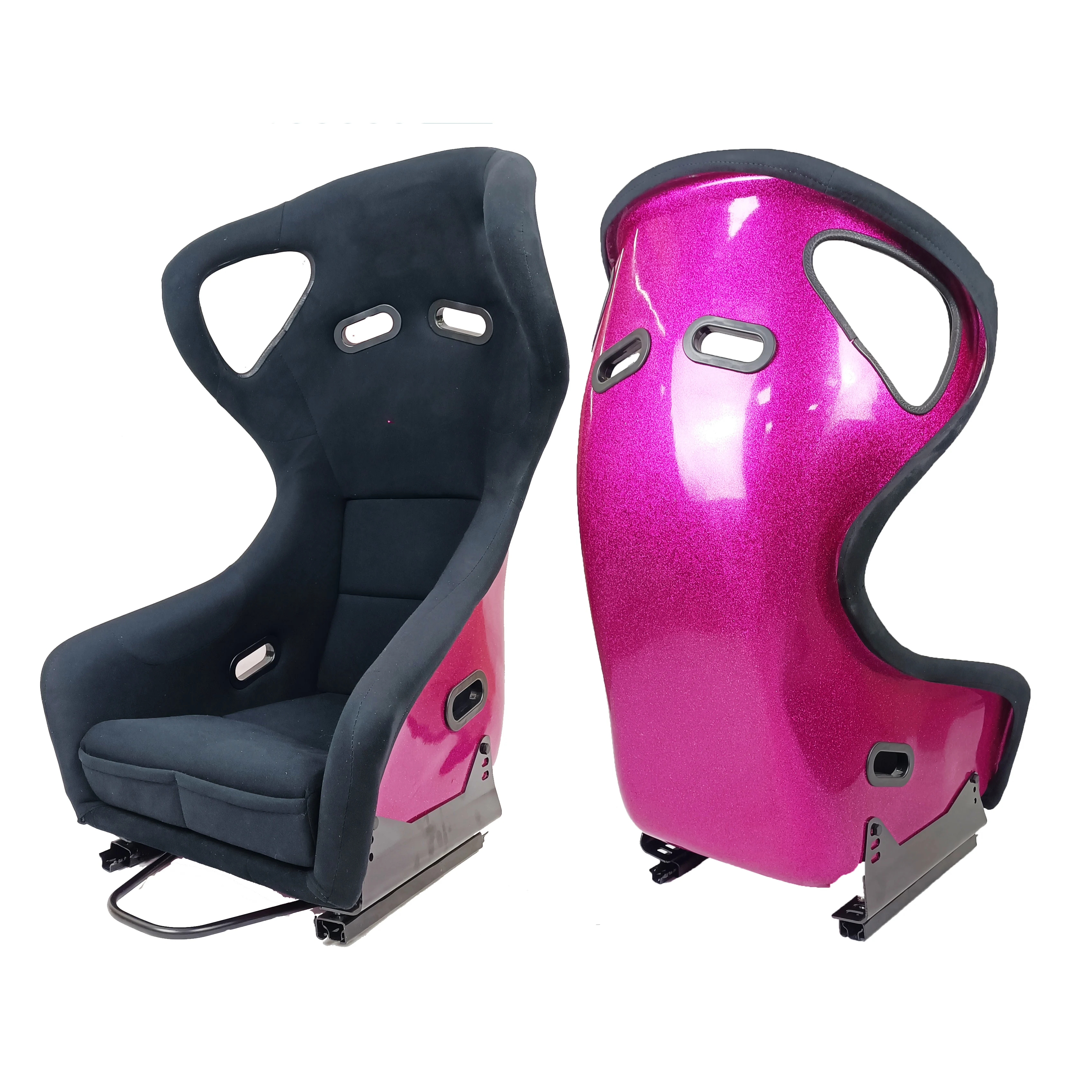
Similarly, the 1070 Series bucket shell incorporates fiberglass construction with a glitter finish and velvet upholstery, supplied with lower bracket rails. Fixed bucket shells of this pattern provide rigidity against rearward flex, but padding thickness is fixed. If you require supplemental lower back contouring, add dedicated ergonomic lumbar inserts.
Ergonomics, Reclining Mechanisms, and Seat Sliders
While fixed shells dominate high-force, competitive driving stations, reclining seats remain widely used for mixed-use setups, long endurance stints, and multi-driver rigs. Reclining seats allow quick transitions from an upright GT posture to a relaxed angle for casual games, flight simulation, or general desktop work.
However, seat sliders introduce their own mechanical behavior. In a field analysis by OC Racing, seat sliders provide quick fore-aft travel for different driver leg lengths, but their dual-rail locking pins can develop minor play over extended use when subjected to heavy pedal forces.
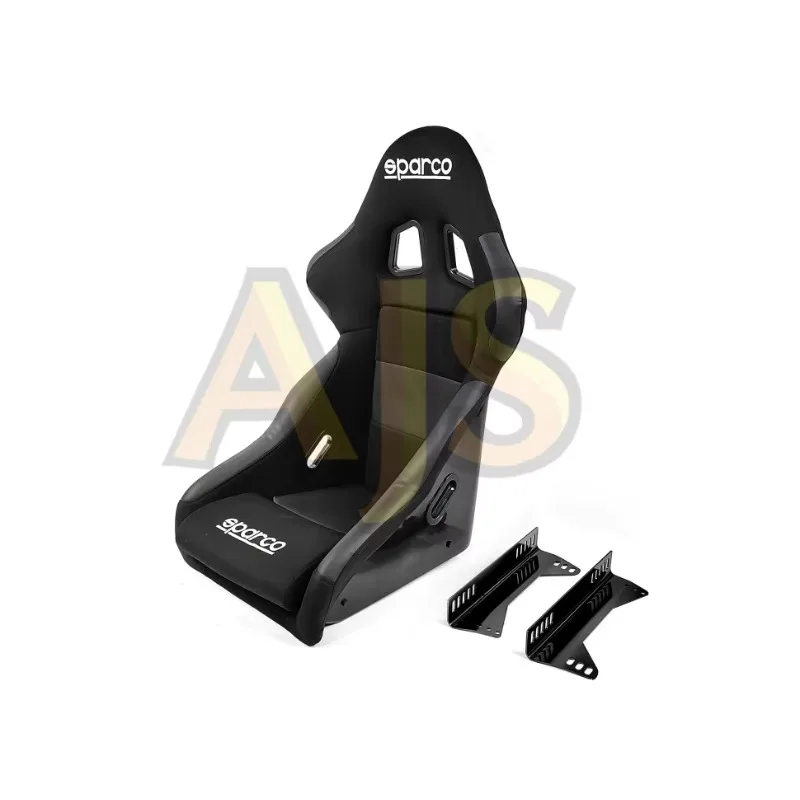
The 1089 Universal Series listed above illustrates a typical sim seat configuration supplied with side mounting brackets. When purchasing universal seats online, always verify with the vendor whether the mounting hole pattern matches standard aluminum profile widths (commonly 345 mm to 405 mm spacing on T-slot chassis) or whether an intermediary adapter plate will be required.
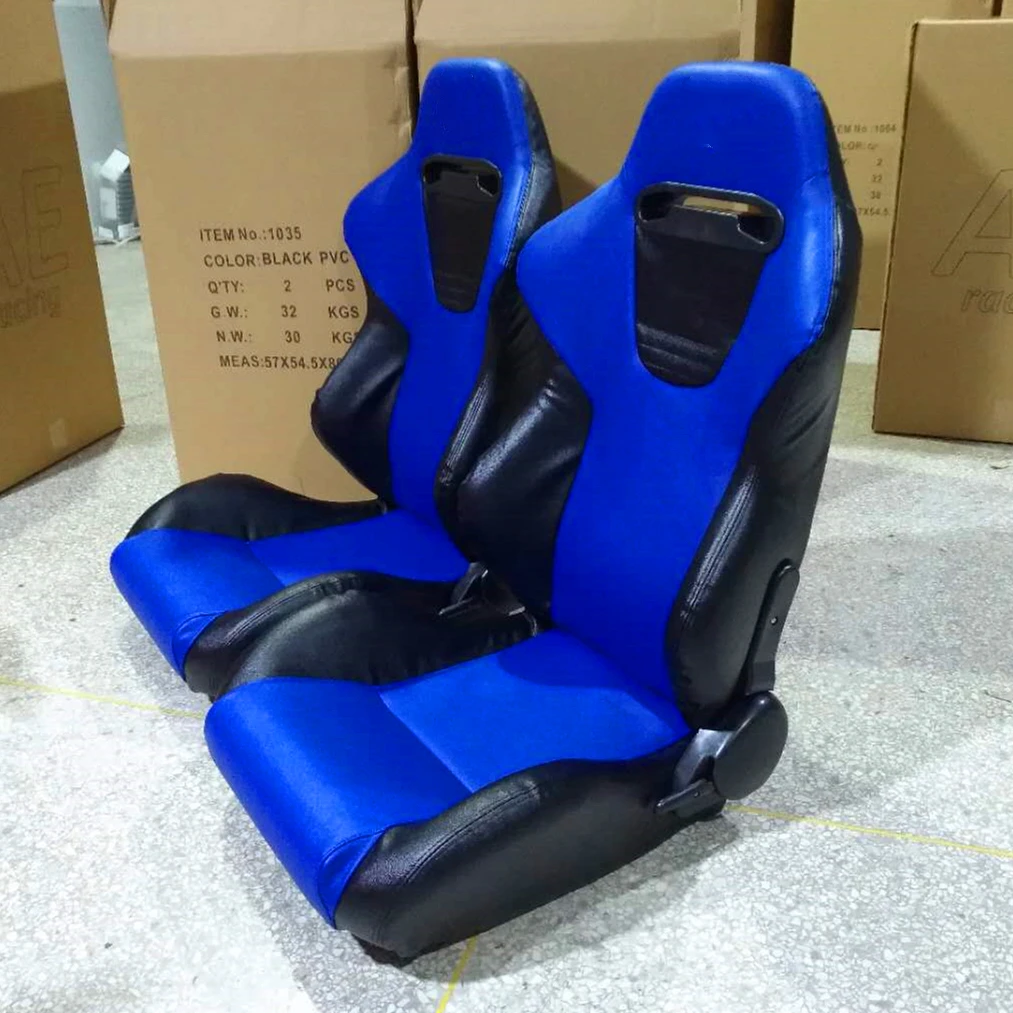
By contrast, the 1034 Blue and Black seat represents the traditional reclining architecture, equipped with side lever adjustment handles. This format provides effortless entry and exit and allows rapid posture adjustments between stints, making it well suited to shared rigs where absolute pedal rigidity takes a back seat to broad accessibility.
Chassis Mounting and Auxiliary Brackets
Connecting your seat to an extruded aluminum or tubular steel rig requires rigid, play-free mounting plates. Bucket seats typically utilize L-shaped side brackets with multiple bolt patterns that allow you to set an aggressive recline angle by tilting the entire shell backward.
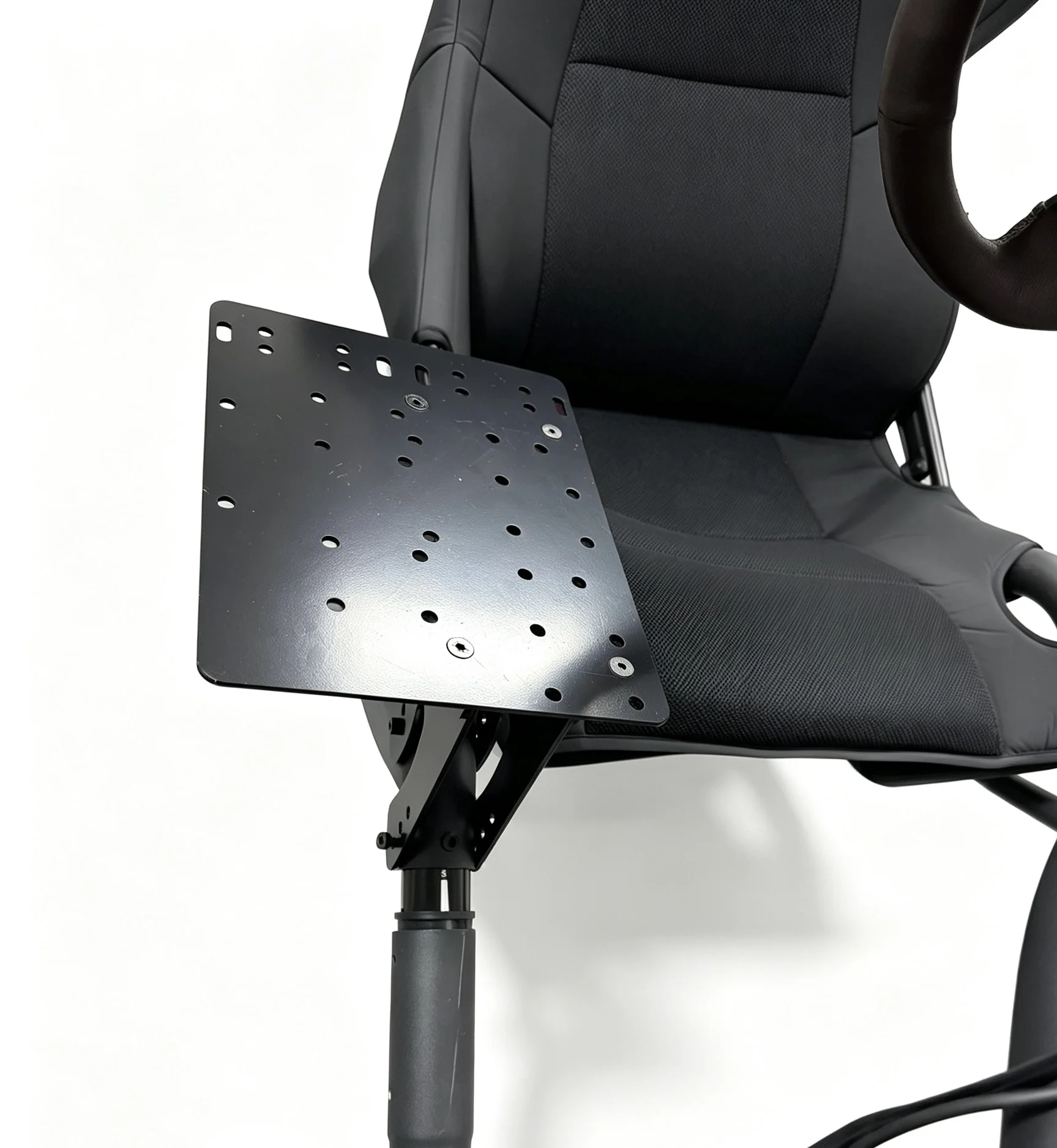
Hardware accessories—such as the manual transmission and auxiliary cockpit bracket shown above—attach directly to the seat or cockpit profile to hold shifters and handbrakes. When adding side attachments to your seating area, always confirm bracket clearance so the mounting plates do not interfere with seat-slider travel levers or broad hip bolsters.
Sim Racing Seat Comparison
| Model Reference | Design Type | Advertised Shell / Material | Mounting Interface | Best Suited For |
|---|---|---|---|---|
| For JBR9031 | Fixed Bucket | Fiberglass / Red Suede | Side-mount brackets (verify pattern) | Stiff load-cell rigs, dedicated single-driver setups |
| 1070 Velvet Series | Fixed Bucket | Fiberglass / Velvet Fabric | Side-mount brackets / Sliders | Aesthetic rig builds, high-support posture |
| 1089 Universal Series | Sport Bucket / Adjustable | Advertised universal upholstery | Side brackets included in listing image | Versatile cockpit mounting across varied wheelbase classes |
| 1034 Series | Reclining Sport Seat | Black & Blue synthetic/PVC finish | Bottom-mount rails / Sliders | Multi-driver setups, endurance comfort, casual racing |
Pre-Purchase Checklist: Verification Before Ordering
Because universal sim seats and automotive marketplace listings do not share a single standardized dimensional blueprint, ask the seller the following verification questions before finalizing your order:
- Hip and Shoulder Dimensions: Fixed bucket seats taper severely at the rib cage and hip flare. Request the exact internal width (in millimeters) at the narrowest base point to prevent painful pressure points during long stints.
- Hole-to-Hole Mounting Spacing: Ask for the exact center-to-center measurement across the bottom rails or side mounting holes. Standard aluminum profile rigs accept 345 mm or 405 mm patterns directly; non-standard spacings require custom drill work or adapter plates.
- Included Hardware vs Visual Staging: Product photos often depict slider assemblies, sub-frames, or side brackets that may or may not be bundled in the standard carton. Always confirm the exact contents of the shipping box.
- Harness and Accessory Compatibility: If planning to install haptic transducers, tactile bass shakers, or seatbelts, check the density and material of the shell underside to ensure safe clamping or bolting.
If your sim rig utilizes high-force pedals and you drive exclusively in a competitive seating position, a rigid fiberglass bucket provides the flex-free foundation necessary for consistent lap times. For broader family use, multi-game desks, or long casual road cruising, a reclining slider seat delivers convenient adaptability at the cost of slight hinge play.
Evaluation is based on published specifications and seller listings. No physical or hands-on testing was conducted; unlisted specifications may still be available from the seller.

